Atlantic cod
Genomics and acoustic telemetry are being combined to resolve population structure, movement and connectivity, including structure occurring below existing management scales.
Marine fisheries genomics
Population genomics, telemetry and applied genetic tools for resolving stock structure, connectivity, adaptation and management units in exploited marine species.
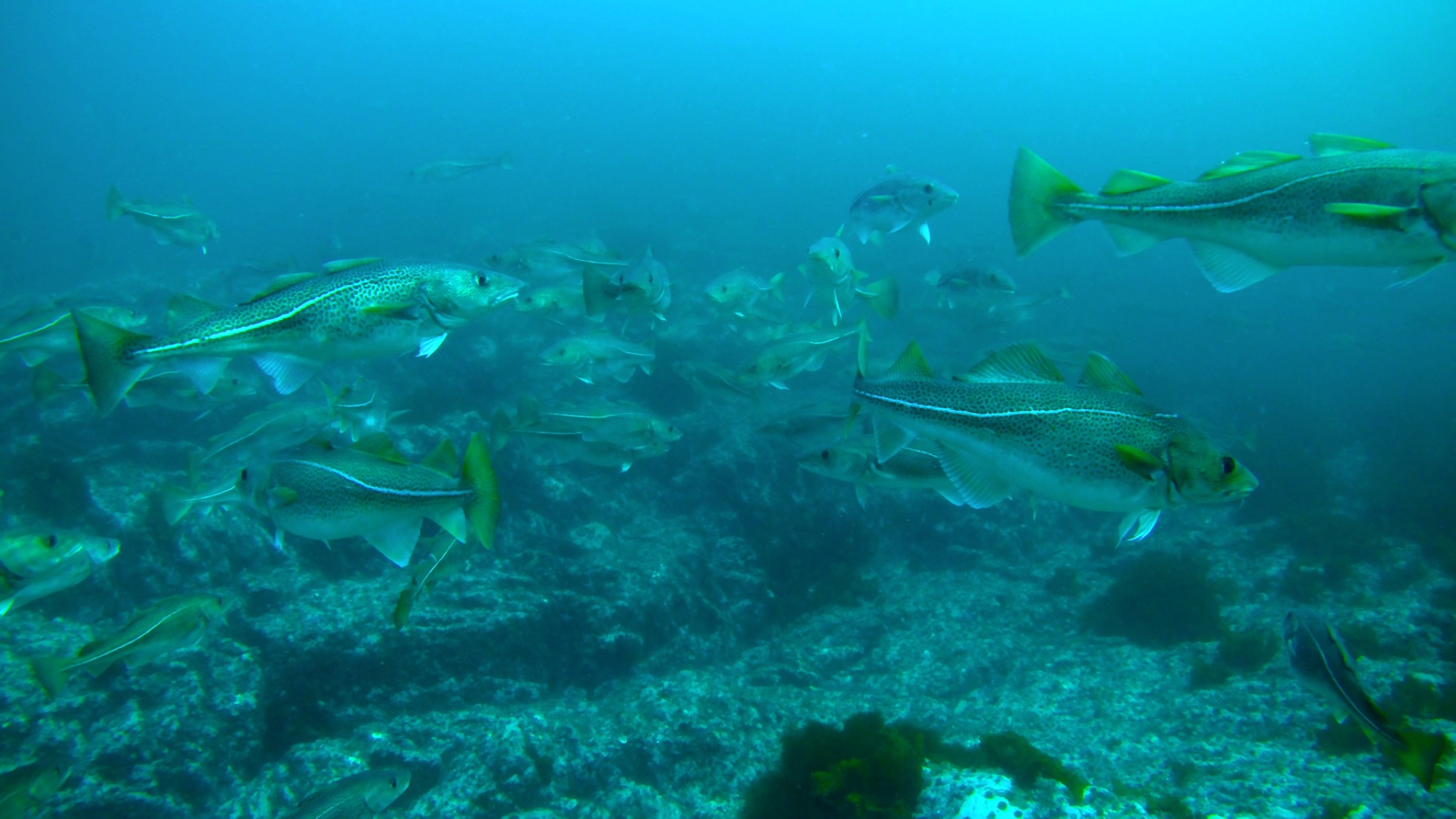
Marine populations can contain biologically meaningful structure at scales finer than conventional management units. Our work combines genome-wide markers, whole-genome sequencing, environmental data and movement information to identify this structure and understand its ecological basis.
Current and recent work spans Atlantic cod, Acadian and deepwater redfish, lumpfish, Atlantic halibut, silver hake and other Northwest Atlantic species. The goal is not simply to describe genomic differentiation, but to translate it into tools and evidence useful for stock assessment, conservation and sustainable fisheries.
Selected directions
Genomics and acoustic telemetry are being combined to resolve population structure, movement and connectivity, including structure occurring below existing management scales.
Genome-wide analyses and targeted assays address species identification, stock structure and the distinctness of populations including Acadian Redfish in Bonne Bay.
Genomic approaches examine population structure, domestication and the consequences of aquaculture-associated selection in a rapidly developing species.
Population genomic analyses test spatial structure and connectivity to strengthen the biological basis of fisheries management.